
How to Choose Food-safe Packaging Materials
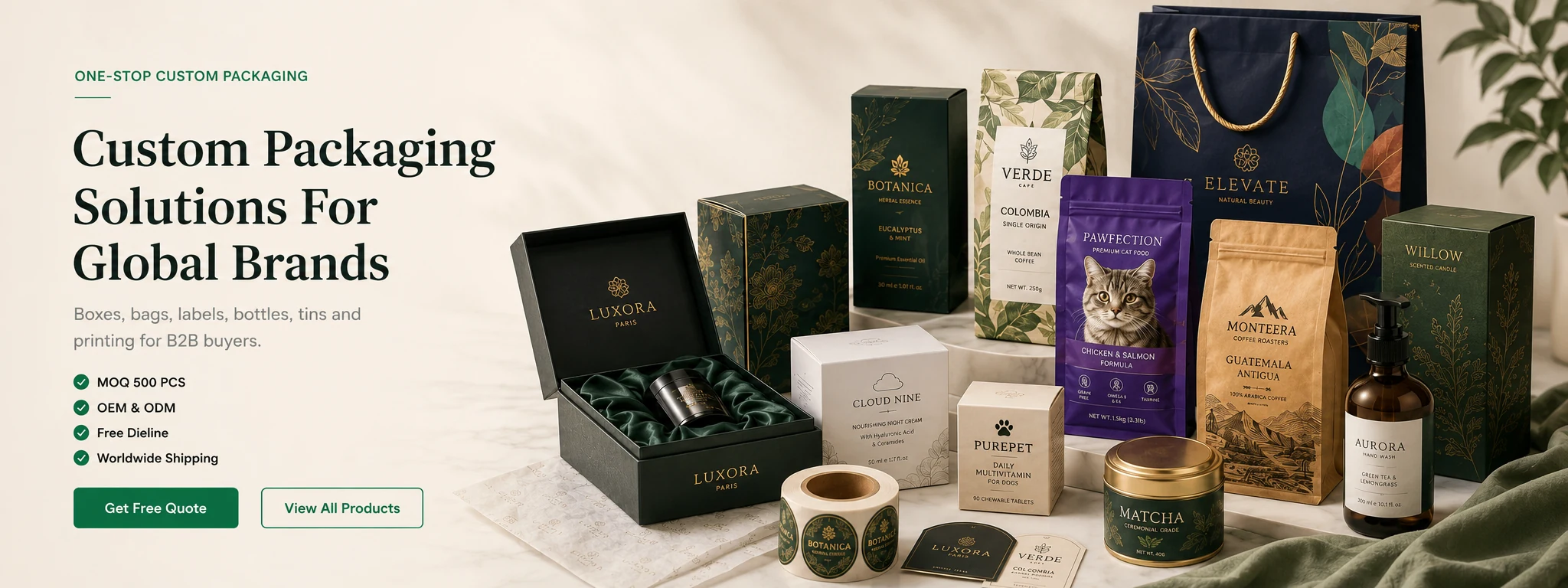
Procurement guide for food-safe packaging materials covering paperboard, coatings, films, grease resistance, samples, QC, compliance and RFQ.
Quick Answer
Food-safe packaging material selection starts with the food type, contact condition, grease or moisture exposure, filling temperature, shelf life, destination market and disposal goal. Buyers should confirm the direct-food-contact layer, coating, migration or compliance requirements, sample testing and packing method before placing a custom order.
Parameter Table for Buyers
| Common MOQ | 500 PCS for custom printed food packaging projects |
|---|---|
| Food variables | Grease, moisture, acidity, freezing, heating and direct contact |
| Material options | Paperboard, kraft paper, PE, PLA, water-based coating and laminate film |
| QC checks | Odor, coating, grease resistance, print rub, seal and carton cleanliness |
| RFQ must include | Food type, contact layer, size, artwork, destination and filling condition |
Start with the food and contact condition
A bakery paper bag, burger box, fries carton, frozen pouch and sauce spout pouch need different materials. The first RFQ question is not only size; it is what food touches the package and under what temperature or moisture condition.
Tell the supplier whether food is dry, oily, hot-filled, frozen, acidic, powdered or liquid. This determines paper weight, coating, laminate and sealant choices.
Choose coating and barrier carefully
Paper food packaging may use PE, PLA, water-based coating or grease-resistant treatment. Flexible food pouches may use PET, nylon, foil, PE, CPP or other laminates depending on shelf life and sealing needs.
A coating that works for dry cookies may fail with hot fries or oily fried chicken. Buyers should ask for the food-contact layer and test samples with real food when risk is high.
Compliance, print and visible content
Food-safe packaging should match the destination market and buyer compliance needs. Avoid adding structured claims, recycling marks or compostable claims unless the material and documentation support them.
Printing should avoid direct food-contact surfaces unless the process and ink system are designed for that use. Small warnings, ingredients, barcode and date code areas should be checked at actual print size.
Samples, QC and shipping
Sample approval should check fit, odor, coating, grease resistance, moisture behavior, fold cracking, seal, print rub and barcode scan. For cartons and bags, test how they stack, open and pack in export cartons.
Shipping decisions affect food packaging because paper can deform under moisture and heavy stacking. Ask for export carton strength and packing quantity.
Common Buyer Mistakes
- Choosing material by appearance instead of food contact condition.
- Assuming all kraft or paperboard is suitable for greasy food.
- Making compostable or recyclable claims without documentation.
- Putting ink or foil in direct food-contact areas without review.
- Skipping real food testing before mass production.
RFQ Template Buyers Can Copy
- Food type, contact condition, filling temperature and shelf-life target.
- Packaging style, finished size, quantity tiers and packing method.
- Required coating, grease resistance, moisture barrier or seal strength.
- Destination market and any food-contact documentation needed.
- Artwork, barcode, date-code area, sample deadline and shipping method.
Food-contact verification method and sources
Method for How to Choose Food-safe Packaging Materials: Build a material-and-use matrix for every food-contact layer, supplier, thickness, food type, contact time, temperature and destination market, then match declarations or migration reports to that exact use.
- U.S. FDA food-contact substance guidance describes the U.S. regulatory routes for substances intended to contact food.
- EU Regulation (EC) No 1935/2004 is the official European Union framework for materials and articles intended to contact food.
Evidence limit: No generic “food grade” statement proves compliance in every market. The importer or food business must verify the exact material structure and intended use against destination-market requirements.
FAQ
What makes packaging food safe?
The material, coating, ink system and direct-contact layer must suit the food type and target market requirements.
Is kraft paper automatically food safe?
No. Kraft appearance does not prove food-contact suitability. Confirm coating and documentation.
Can I use the same box for hot and cold food?
Only if the material and coating are suitable for both conditions. Test with real food before bulk production.
What should I ask the factory first?
Tell the factory the food type, contact condition, size, quantity, destination market and required documents.
Request a factory quote
Send product size, quantity, material, finish, artwork status, destination country and deadline. BestPackFactory will review the RFQ and help with dieline, sampling, production, QC and export shipping.