
Pet Food Bag Barrier Material Guide
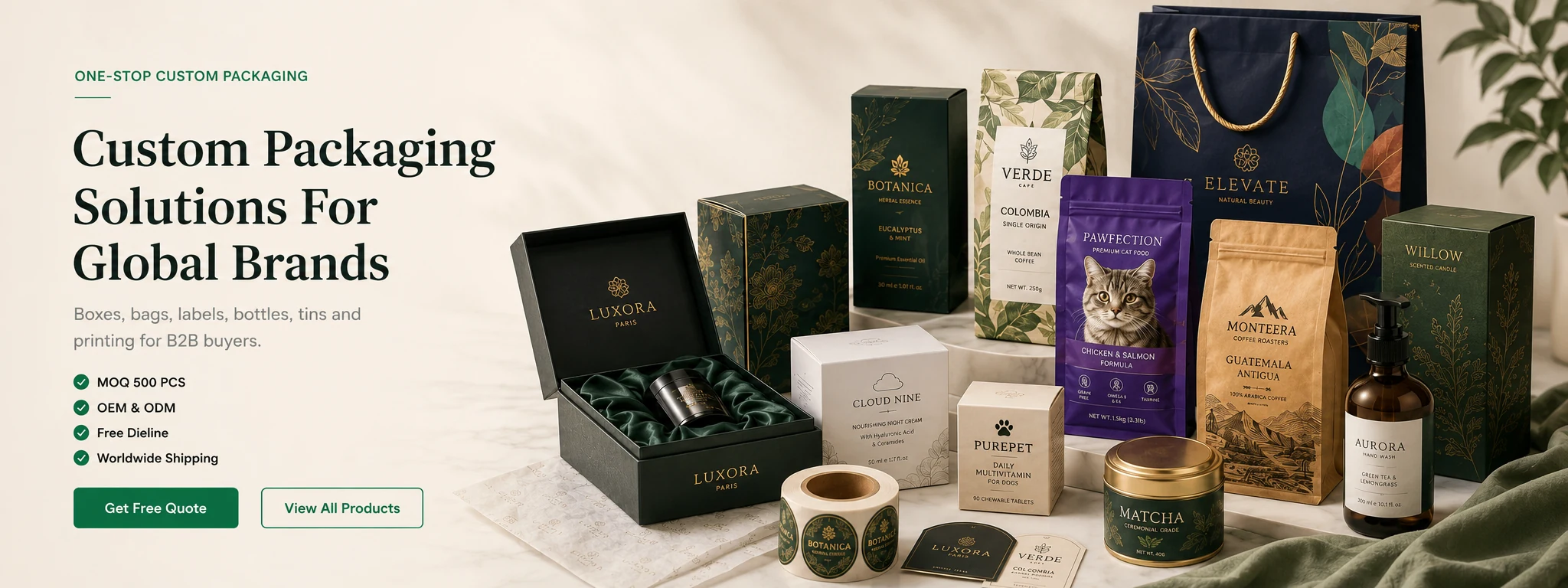
B2B guide to pet food bag barrier materials for kibble, treats and supplements: laminate structure, oil resistance, zipper, MOQ, QC and RFQ.
Quick Answer
Pet food bags need barrier materials that protect aroma, fat, moisture and shelf life while holding heavier fill weights. Common options include PET, VMPET, aluminum foil, PE, nylon and kraft outer layers, with zipper, handle and flat bottom structures chosen by weight and retail channel. Buyers should test seal strength, drop resistance and odor barrier before bulk production.
Parameter Table for Buyers
| Typical MOQ | 500 PCS per pet food bag size and artwork |
|---|---|
| Barrier needs | Oxygen, moisture, aroma, oil resistance and puncture resistance |
| Common structures | PET/VMPET/PE, PET/AL/PE, NY/PE and kraft laminate options |
| Functional options | Zipper, handle, tear notch, flat bottom, side gusset and rounded corners |
| QC checks | Seal strength, zipper, drop test, rub test, odor and carton packing |
Why pet food needs strong barrier
Kibble, treats and pet supplements often contain fats, flavors and aromas that can oxidize or migrate. Weak material can create odor loss, greasy surfaces, pinholes or poor shelf life.
The correct structure depends on product weight, oil level, shelf-life target and sales channel. A small pet treat pouch and a 2 kg dog food flat bottom bag should not be quoted with the same assumptions.
Material structures buyers should compare
PET/VMPET/PE is common for high barrier and print quality. PET/AL/PE gives stronger barrier for demanding shelf-life needs. NY/PE can improve puncture resistance. Kraft laminate can support a natural brand look when combined with a suitable inner layer.
Ask the supplier to explain what each layer does. This makes supplier comparison easier and prevents low quotes based on thinner or weaker material.
Bag style, zipper and weight planning
Flat bottom bags are useful for heavier retail pet food because they stand well and offer large print panels. Stand up pouches work for treats and smaller packs. Side gusset bags can support bulk formats.
Zipper strength and seal area matter because pet food bags are opened repeatedly. For heavy products, handle placement and carton packing also affect customer experience.
Sampling, QC and shipping
Sample checks should include fill test, standing stability, zipper cycle, seal strength, rub resistance, odor barrier, puncture resistance and drop behavior. If the bag will ship filled, the empty packaging sample is only the first test.
Ask for carton dimensions and packing quantity for empty bags. Large flat bottom bags can create freight volume even before filling.
Common Buyer Mistakes
- Using snack pouch material for oily or heavy pet food.
- Ignoring zipper strength for repeat opening.
- Choosing flat bottom structure without checking carton volume.
- Skipping drop and puncture testing for heavier fill weights.
- Comparing quotes without laminate thickness or layer structure.
RFQ Template Buyers Can Copy
- Pet food type: kibble, treat, freeze-dried product, supplement or powder.
- Fill weight, bag style, finished size and expected shelf life.
- Barrier target, oil level, zipper, handle, valve or window needs.
- Material preference, artwork files, SKU count and quantity tiers.
- Filling method, carton packing, destination and required delivery date.
Barrier and seal verification method
Method for Pet Food Bag Barrier Material Guide: Specify the final laminate, specimen count, conditioning, temperature and humidity, test method, equipment, units and acceptance limits before comparing barrier or seal results.
- ISO 2528:2017 specifies a gravimetric method for water-vapour transmission rate and states important sensitivity and material limits for that method.
- ASTM F88/F88M-23 measures flexible-barrier seal strength and requires the support technique to remain consistent within a test series.
Evidence limit: A material name or generic target is not a batch result. Buyers should require a report for the final printed laminate that identifies the method, conditions, specimen preparation, results and acceptance limit.
FAQ
What barrier is best for pet food bags?
It depends on oil level, aroma, shelf life and weight. Foil or VMPET laminates are common for stronger protection.
Can pet food bags use kraft paper?
Yes, as an outer layer, but the inside still needs a suitable barrier and sealant layer.
Which style is best for dog food?
Flat bottom or side gusset bags are common for larger weights; stand up pouches work well for treats and smaller packs.
What QC test is most important?
Seal strength, zipper performance, puncture resistance and fill/drop behavior are key checks.
Request a factory quote
Send product size, quantity, material, finish, artwork status, destination country and deadline. BestPackFactory will review the RFQ and help with dieline, sampling, production, QC and export shipping.