
Saddle Stitch, Perfect Bound, PUR, Hardcover or Wire-O: Choosing a Binding by Page Count and Use
Quick answer
Choose by page count first, then by how the document is used. Saddle stitch typically suits thin booklets and short catalogues of about 8–64 pages (always a multiple of 4). Perfect binding suits thicker catalogues and softcover books, commonly from around 40–48 pages up, and gives a printable spine; PUR is a stronger perfect-binding adhesive that opens flatter and holds coated paper better. Case binding (hardcover) is for books that must last, and wire-o or spiral is for manuals and workbooks that must lie flat while in use. Exact limits depend on paper thickness, so confirm them on a sample.
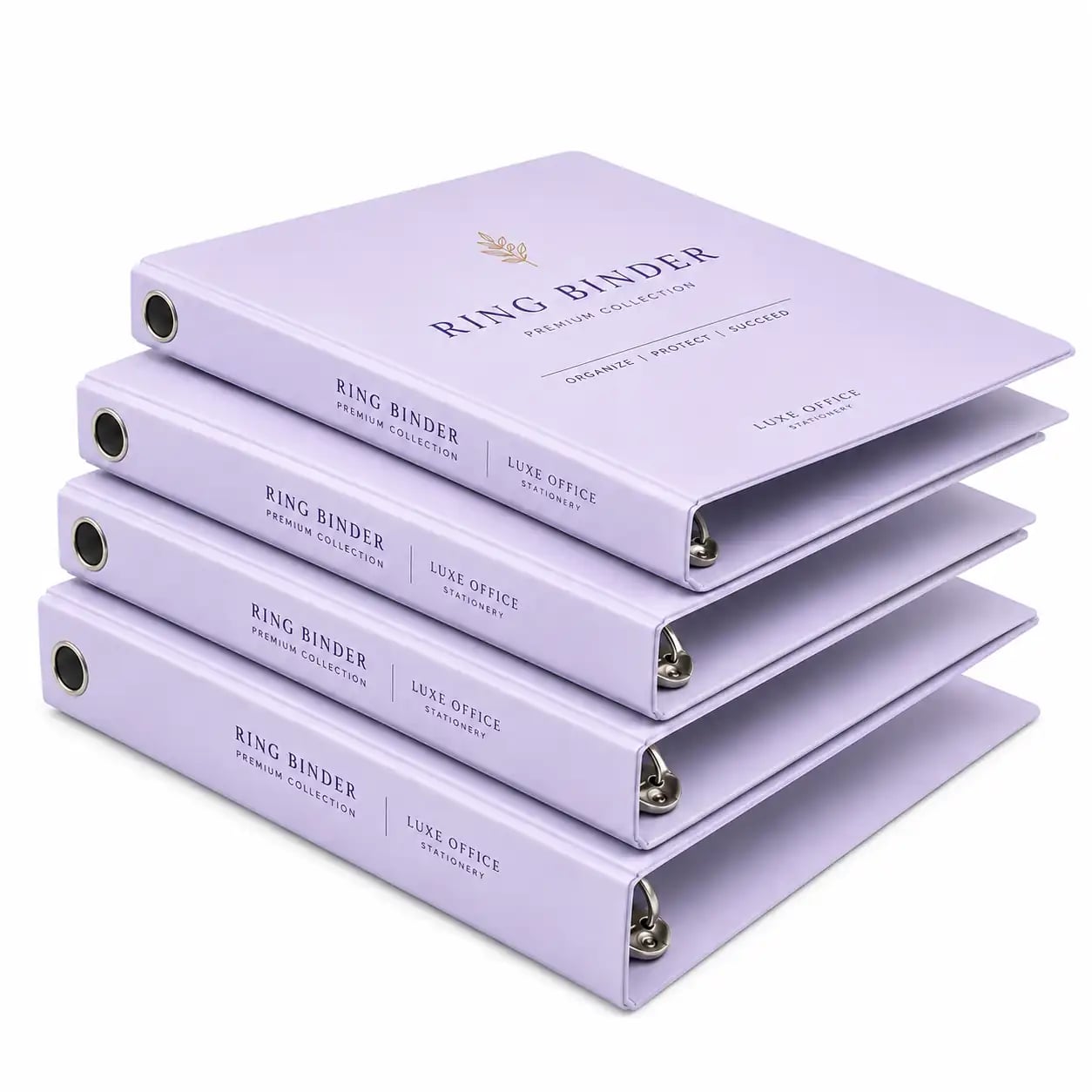
Quick facts: Custom PP Ring Binder Folders
- Indicative unit price: ring binders about US$0.40–1.50 per piece; full-colour paperback books of 80–200 pages about US$1.80–4.50 per copy, at 500 pcs. This is a guide, not a quotation: the final price depends on size, material, print colours, finish and order quantity.
- MOQ: typically from 500 pcs per size and artwork; the confirmed minimum depends on material, print method and features and is stated on the quotation.
- Lead time: Physical samples 5–7 working days after artwork is confirmed; bulk production 20–30 days after sample approval.
- Who makes it: BestPackFactory’s own factory in Longhua District, Shenzhen, China. Free dieline and artwork proof within 24 hours. See real samples and videos.
- Specifications and quote: Custom PP Ring Binder Folders · Request a quote
Binding comparison
| Binding | Typical page range* | Page count rule | Lies flat? | Printable spine? | Best for |
|---|---|---|---|---|---|
| Saddle stitch | About 8–64 pages | Multiple of 4 | Opens reasonably flat | No | Brochures, short catalogues, event programmes, slim instruction booklets |
| Perfect binding (EVA hot-melt) | Commonly from about 40–48 pages upward | Even number; signatures of 8, 16 or 32 preferred | No, springs closed | Yes | Product catalogues, softcover books, reports |
| PUR perfect binding | Similar to perfect binding, sometimes slightly lower minimum | Even number | Flatter than EVA | Yes | Heavily used catalogues, coated-paper books, cookbooks |
| Case bound (hardcover) | Usually thicker books | Signatures, commonly 16 pages | Good when sewn | Yes, on the case | Premium books, brand books, long-life reference works |
| Wire-o / spiral (coil) | From a few pages to a thick block, limited by wire diameter | Even number (each leaf = 2 pages) | Yes, 360° fold-back | No (unless a wrap cover is used) | Instruction manuals, workbooks, calendars, recipe books |
| Ring binder | Any, loose-leaf | None | Yes | Yes, on the binder spine | Manuals and price lists that are updated page by page |
*Ranges are typical industry figures. Heavier paper lowers the saddle-stitch maximum and lowers the perfect-binding minimum. The workable range for your paper is confirmed on a dummy or sample.
Saddle stitch
Folded sheets are nested inside each other and stapled through the spine fold. Because each folded sheet makes four pages, the total including the cover must be a multiple of 4. It is usually the most economical option and the fastest to finish. The limit is bulk: past roughly 64 pages on ordinary text paper (fewer on heavier stock), the booklet will not close neatly and the inner pages push outward, an effect called creep, which designers compensate for by shifting page content slightly. There is no flat spine, so the title cannot be printed on the edge.
Perfect binding and PUR
Pages are gathered into a block, the spine edge is ground or notched, and a wraparound cover is glued on. The result is a square, printable spine that looks professional on a shelf. Too few pages give a spine too thin to glue reliably, which is why a minimum page count applies.
Standard perfect binding commonly uses EVA hot-melt glue. PUR (polyurethane reactive) adhesive is generally stronger and more flexible once cured, holds better on coated and heavy papers, copes better with heat and cold, and lets the book open flatter. It typically needs a curing time after binding and usually costs more. Choose PUR when a catalogue will be opened many times, printed on coated paper, or shipped through hot or cold climates.
Case binding (hardcover)
The page block is sewn or glued, then attached to a rigid cover made of board wrapped in printed paper, cloth or another material, usually with endpapers. Sewn case binding is the most durable option and opens well. It also involves the most steps, so cost per unit and production time are higher. It suits brand books, premium product books, anniversary books and any title expected to be kept for years.
Wire-o and spiral binding
Holes are punched along the edge and a metal double-loop wire (wire-o) or plastic or metal coil (spiral) is inserted. The book lies completely flat and can fold back on itself, which is why it is popular for instruction manuals, workbooks, service guides and calendars that people use with their hands busy. Tabbed dividers can be added. The trade-off is that there is no printed spine unless a wrap-around or concealed-wire cover is specified.
Decision rules
- Under about 40 pages: choose saddle stitch; perfect binding is usually not practical.
- About 40–64 pages: either works. Choose saddle stitch for lower cost, perfect binding for a printed spine and a more substantial feel.
- Over about 64 pages: choose perfect binding, or PUR if the document will be used heavily or uses coated paper.
- Must lie flat on a workbench or desk: choose wire-o or spiral.
- Content changes often: choose a custom ring binder so pages can be replaced without reprinting the whole manual.
- Must last for years or signal premium quality: choose case binding.
What to send in your RFQ
- Finished size (width × height in mm) and orientation.
- Total page count including or excluding cover, and whether the cover is self-cover or a separate heavier stock.
- Inside paper and cover paper preferences (or the look and feel you want), plus colours per side.
- Preferred binding, or the use case so the binding can be recommended.
- Cover finishes such as lamination, spot UV or foil.
- Quantity and destination country.
BestPackFactory produces printed books, catalogues and instruction manuals in its own factory alongside its packaging lines, with a site-wide MOQ of 500 PCS. Which binding methods, paper grades and page ranges apply to your specific project are confirmed in the quotation.
Common mistakes
- Designing a 30-page saddle-stitched booklet: the count must be rounded to 28 or 32.
- Choosing perfect binding for a very thin document, so the spine is too narrow to hold glue or text.
- Placing important content too close to the spine on perfect-bound books, where some of it disappears into the binding.
- Ignoring creep on thick saddle-stitched booklets, so outer margins look uneven.
- Expecting a wire-o manual to show a title on the spine.
Before files go to print, run through the print prepress checklist for bleed, resolution and colour mode.
Frequently asked questions
How many pages can a saddle-stitched booklet have?
Commonly up to about 64 pages on ordinary text paper, fewer on heavy paper. The page count must be a multiple of 4, including the cover.
What is the difference between perfect binding and PUR binding?
Both glue pages into a square spine. PUR uses a polyurethane reactive adhesive that is generally stronger and more flexible, holds coated paper better and lets the book open flatter, usually at a higher cost.
Which binding is best for an instruction manual?
Wire-o or spiral binding is common because the manual lies flat and can fold back. If pages are updated often, a ring binder is the more flexible choice.
Does BestPackFactory print books and catalogues?
Yes. BestPackFactory produces printed books, catalogues and manuals in its own factory, MOQ 500 PCS. Binding method, paper and lead time are confirmed in the quotation.
Related pages
Prepare a quote-ready brief
Send the specification, quantity, artwork status and target date. MOQ is 500 PCS and projects are quoted as B2B orders; materials, process and lead time are confirmed in the quotation. You can also reach Lisa on WhatsApp +86 158 8653 0985 or at lisa@colorprintingpackage.com.
Request a project quote