
Why Hot Foil Cracks or Flakes on Box Fold Lines, and How to Design Around It
Quick answer
Hot foil is a very thin metallic layer with almost no stretch, so when a carton or rigid-box wrap is bent through 90 degrees the outside of the fold stretches and the foil can split, show white fibre or flake off. The most reliable prevention is in the artwork: keep foil off crease and wrap lines, typically by at least 2 to 3 mm, and avoid large solid foil areas that run across a fold. Where foil must cross a fold, specify the board, grain direction, crease size and foil type for that job and approve a folded sample, not a flat sheet.
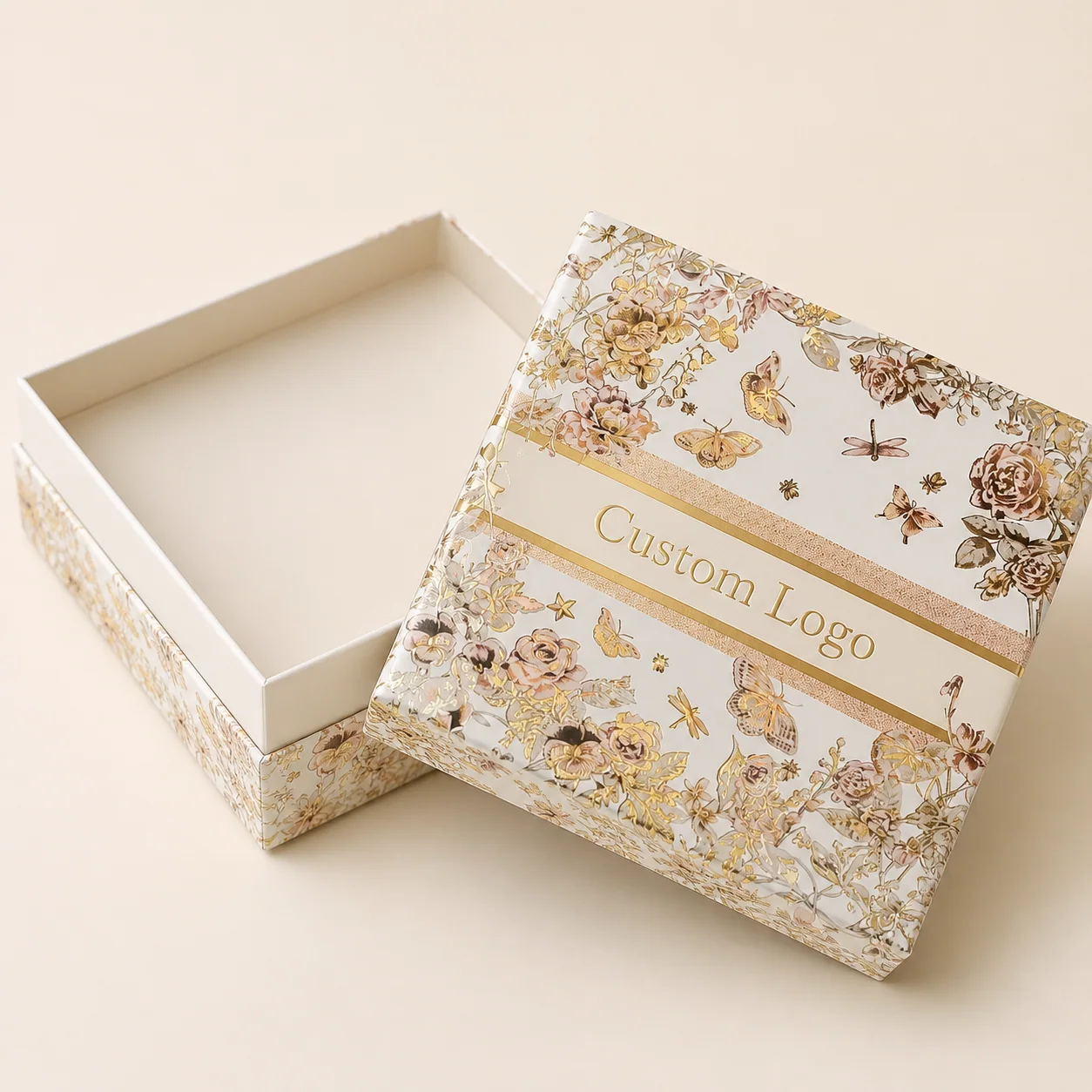
Quick facts: Custom Floral Rigid Gift Boxes with Gold Foil Logo
- Indicative unit price: from about US$0.50 per box. This is a guide, not a quotation: the final price depends on size, material, print colours, finish and order quantity.
- MOQ: typically from 500 pcs per size and artwork; the confirmed minimum depends on material, print method and features and is stated on the quotation.
- Lead time: Physical samples 5–7 working days after artwork is confirmed; bulk production 20–30 days after sample approval.
- Who makes it: BestPackFactory’s own factory in Longhua District, Shenzhen, China. Free dieline and artwork proof within 24 hours. See real samples and videos.
- Specifications and quote: Custom Floral Rigid Gift Boxes with Gold Foil Logo · Request a quote
Foil cracking is one of the few print defects that only appears after the box is formed. The flat sheet looks perfect; the problem shows up on the folding line, the lid edge or the corner of a rigid box once the board is bent. This guide explains why it happens and what to put in the artwork and specification so it does not. For foil types, dies and minimum line widths, see our hot foil stamping guide.
Why foil cracks on a fold
When paperboard is folded, the outer surface is stretched and the inner surface is compressed. Coated board, printed ink, laminate film and hot foil all sit on that outer surface. Foil and many coatings stretch very little, so they fracture before the fibres underneath do, or the fibres themselves split and lift the foil with them. The visible result is a fine line of cracks, white board showing through, or foil lifting in flakes along the fold.
The main contributing factors are well known in carton printing:
- Foil placed on or near the crease. The closer the foil is to the centre of the fold, the more stretch it sees.
- Folding against the grain. Paperboard has a grain direction. Folds made against the grain are generally stiffer and more likely to crack on the surface than folds along the grain. Grain direction on a carton is also chosen for stiffness and machine running, so it is a trade-off the factory has to balance.
- Crease too narrow, too deep or too shallow for the board. The crease rule and the counter (matrix) channel need to match the board caliper. A badly matched crease concentrates stress at the surface instead of creating a clean hinge.
- Dry or brittle board. Board that has lost moisture, for example in a heated warehouse in winter, is less flexible and cracks more easily on folds.
- Foil over laminate, varnish or soft-touch. Foil adhesion and flexibility depend on the surface. Foil applied over film lamination, UV coating or soft-touch needs a foil grade suited to that surface; a mismatch can lead to poor adhesion that shows first on folds.
- Heavy solid foil areas. A thin foil line across a fold may survive; a large solid foil panel wrapping around an edge is much more likely to show cracks.
Risk table: where foil meets a fold
| Design situation | Typical risk | What to do |
|---|---|---|
| Foil logo in the middle of a panel | Low | No special action |
| Foil ending a few millimetres before a crease | Low to moderate | Keep a clearance, commonly 2 to 3 mm; confirm on a folded sample |
| Thin foil line or border crossing a crease | Moderate | Test fold on the real board; consider breaking the line at the fold |
| Solid foil panel crossing a crease or tuck flap | High | Redesign, split the foil at the fold, or use metallic ink or a foil-look print instead |
| Foil wrapping over the edge of a rigid box lid | High | Stop foil before the edge or turn-in; approve a made-up sample |
| Foil on soft-touch or laminated board across a fold | Moderate to high | Specify a foil compatible with the surface; folded sample required |
Artwork rules near folds
- Put crease lines in the foil layer view. Build the foil as a separate spot layer on the supplier's dieline and check it against crease and fold lines; our guide to dieline line types explains how cut and crease lines are drawn.
- Keep a clear margin from creases. A common starting point is 2 to 3 mm from the crease centre line. Folding cartons, tuck flaps and dust flaps are the usual trouble spots; check the tuck end box dieline for where those creases fall.
- Break continuous borders at the fold. If a foil frame runs around the box, interrupt it at each crease, or end it on each panel.
- Avoid solid foil across rigid-box edges. On a wrapped rigid box, the wrap paper is pulled tight around the greyboard edge. Foil on that edge sees both a sharp bend and rubbing. Keep foil on the flat lid top or sides.
- Allow for registration. Foil, print and die-cutting each have their own tolerance. Do not design foil that relies on stopping exactly at a crease.
What to specify when foil must cross a fold
Some designs need foil to wrap around, for example a continuous band on a sleeve or a full-foil carton. In that case the decision belongs in the specification, not just the artwork:
- Board grade and caliper, and whether a board with better folding performance is needed; see our board grade comparison.
- Grain direction relative to the folds that carry foil, confirmed with the factory.
- Foil type suited to the surface: plain coated board, film laminate, soft-touch or varnish.
- Folded sample approval: ask for the made-up box, folded several times, and inspect the folds under good light.
- Storage condition: keep flat sheets and finished cartons away from heaters and direct sun before converting and filling, so the board does not dry out.
Decision rules
- Choose hot foil when the metallic element sits on flat panels with clear space around creases.
- Choose a split design (foil interrupted at each fold) when you want a border or band effect on a folding carton.
- Consider metallic ink or a cold-foil effect when a large metallic area must wrap around folds; they behave differently on a fold, so test them on the same board.
- Choose a rigid box with foil on the lid top rather than on the edges when the box is a premium gift item; see floral rigid gift boxes with gold foil logo for that layout.
Common mistakes
- Approving foil from a flat proof or flat press sheet only.
- Drawing a foil frame exactly to the crease line "so it looks continuous".
- Putting soft-touch lamination and heavy foil together across a fold without asking about foil compatibility.
- Ignoring storage: very dry winter warehouses make folds more brittle.
What to send in your RFQ
- Box style and size, with the dieline showing every crease.
- The foil layer as a separate spot colour, with foil colour and finish.
- Board type and any coating, lamination or soft-touch.
- A note of which foil elements cross folds or edges, and a request for a folded or made-up sample.
Related products: custom folding cartons.
Frequently asked questions
Why does hot foil crack on the fold of my box?
Foil and surface coatings stretch very little. When the board folds, the outside of the fold stretches, so foil on or near the crease can split, show white fibre or flake. Grain direction, crease size, dry board and the surface under the foil all affect how much.
How far should foil be from a crease line?
A common starting point is about 2 to 3 mm from the crease centre line, but it depends on board, crease and foil. Confirm on a folded sample.
Can foil go across a fold at all?
Thin lines often can if the board, grain direction, crease and foil type suit it, but solid foil areas across folds and rigid-box edges carry a higher risk. Approve a folded or made-up sample before production.
Does soft-touch lamination make foil cracking worse?
It can if the foil is not suited to that surface. Ask the supplier to confirm a foil grade compatible with soft-touch or laminate and test it on a folded sample.
Related pages
Prepare a quote-ready packaging brief
Send the box style and size, dieline, board, any lamination or soft-touch, the foil layer as a separate spot colour and a note of which foil elements cross folds, and ask for a folded sample. Every BestPackFactory product is made in our own factory, and custom packaging is quoted as a B2B project with a site-wide MOQ of 500 PCS. Reach Lisa Wu at lisa@colorprintingpackage.com or WhatsApp +86 158 8653 0985; anything not listed here is confirmed in the quotation.
Request a project quote